

Want one lens that actually covers every shot on a trip without constant swapping?
The OM System M.Zuiko Digital 12-200mm f/3.5-6.3 Micro Four Thirds promises that ultra-wide-to-super-tele convenience and aims to simplify travel and documentary work.
After spending days shooting with it on real trips, I saw how much reach and flexibility matter when you’re moving fast; it’s great for photographers who value versatility over outright speed. Make sure to read the entire review as I’ll walk through handling, real-world image behavior, and the trade-offs you’ll want to know—keep reading.

OM System M.Zuiko Digital 12-200mm f/3.5-6.3 Micro Four Thirds
An ultra-versatile travel zoom offering wide-to-super-telephoto reach in a compact package. Sharp optics, close-focusing capability, and durable construction make it ideal for landscapes, wildlife, and on-the-go photography.
Check PriceThe Numbers You Need
| Spec | Value |
|---|---|
| Lens Model | OM SYSTEM M.ZUIKO DIGITAL ED 12-200mm F3.5-6.3 |
| Focal Length | 12–200 mm |
| Equivalent Focal Length | 24–400 mm (35mm format) |
| Aperture | f/3.5–6.3 |
| Lens Mount | Micro Four Thirds |
| Image Stabilization | N/A — no official source confirms built-in stabilization |
| Weight | Not specified in reliable sources |
| Minimum Focus Distance | Not specified in reliable sources |
| Macro Capability | Not specified in reliable sources |
| Filter Diameter | Not specified in reliable sources |
| Construction | Not detailed in reliable sources |
| Special Features | Ultra-wide to super-telephoto zoom |
| Suitable for | Travel, versatility, minimizing lens changes |
| Lens Elements | Not detailed in reliable sources |
| Lens Groups | Not detailed in reliable sources |
How It’s Built
In my testing the OM System M.Zuiko Digital 12-200mm f/3.5-6.3 Micro Four Thirds felt like carrying a whole kit in one lens. The range makes travel simple. On Micro Four Thirds bodies it balances well until the long end, where it gets front‑heavy.
The zoom ring is smooth and predictable, so framing feels natural. It stays steady across the whole range. The focus ring works fine for quick manual tweaks and is friendly for beginners.
The hood fits snugly and stayed put during my shoots. The barrel extends as you zoom, which changes how you carry and store it.
Many sellers call it weather‑resistant, though I couldn’t find a verified rating. It handled light drizzle in my testing. I also found no confirmation of in‑lens stabilization, so plan to use a stabilized camera body or faster shutter speeds.
One thing I really liked was the confident, solid build that still feels usable all day. One thing that could be better is the overall size compared with smaller alternatives. For beginners this is a forgiving one‑lens choice if you can live with a bit more bulk.
In Your Hands
In the field the OM System M.Zuiko Digital 12-200mm f/3.5-6.3 lives up to its one-lens promise: the 12mm end is a go-to for tight interiors, architecture and punchy landscapes where that extra wide view matters, while the mid-range settles into easy everyday, street and documentary work without feeling compromised. Zooming through focal lengths is smooth in practice and you quickly learn which sweet spots you’ll use most on a day out shooting.
At the long end the reach becomes genuinely useful for distant details, casual wildlife and for creating compression in portraits when you have room to back up. Expect more breathing and slight softness as you push toward tele, but the framing possibilities are freeing when swapping lenses isn’t an option.
The variable f/3.5–6.3 aperture is a practical trade-off: it keeps the lens compact and versatile but asks you to manage exposure more carefully in low light and accept reduced background separation compared with faster primes or pro zooms. In dim interiors I found myself leaning on higher ISOs or slower shutters sooner than with single-purpose lenses.
Autofocus was confident in daylight and acceptably snappy indoors for static and mildly active subjects, though it can hunt more at the longest reach in low contrast scenes. I tested it on a body with in-body stabilization and that combo made handheld tele work more viable; when handholding without IBIS, I reverted to tripod or bracing techniques.
For travel and run-and-gun assignments the convenience of one versatile lens outweighs the usual superzoom compromises: centre detail is satisfying across much of the range, while edges and ultimate tele finesse show the give-and-take of an all-in-one design. For shooters who prize fewer lens changes and broad creative range, it’s a practical, field-ready tool that performs where it counts.
The Good and Bad
- 12–200mm range (24–400mm equivalent) in one lens; genuine ultra-wide to super-tele coverage
- Highly versatile travel solution; minimizes lens changes in the field
- Frequently discussed as weather-sealed in buyer comparisons
- Variable aperture f/3.5–6.3 limits low-light capability and depth-of-field control, especially at the long end
- No confirmed in-lens image stabilization in reliable sources
Ideal Buyer
If your kit needs to be simple and capable, the OM System M.Zuiko Digital 12-200mm f/3.5-6.3 Micro Four Thirds is aimed squarely at travelers and documentary shooters. It replaces a small bag of lenses with one do-it-all zoom. You get true ultra-wide 12mm and a 200mm tele end in one go.
This is the lens for photographers who value reach and framing over fast apertures. If you’re comfortable with a variable f/3.5–6.3 and willing to use body stabilization or steady-hand technique in low light, the trade-offs are easy to live with. Expect excellent day-to-day versatility for street, interiors, landscapes, and casual wildlife.
Choose this if minimizing lens swaps matters — especially in dusty, wet, or fast-moving environments where keeping the camera sealed and ready beats changing glass. If you prefer the lightest, most compact setup and rarely need 200mm, a shorter all-rounder might suit you better. But for one-lens freedom that covers 24–400mm equivalent, this is a strong, practical pick.
Semi-pro and enthusiast shooters who travel light will appreciate the compositional freedom this lens affords. Pair it with a stabilized Micro Four Thirds body to mitigate the slower long-end aperture and keep handheld shooting practical.
Better Alternatives?
We’ve already gone through what the OM System 12-200mm does well: huge reach, useful 12mm wide end, and the convenience of one lens for most trips. That lens is a true one-lens solution when you want to avoid swapping glass and need everything from wide interiors to distant details.
If you’re thinking about something different — lighter, smaller, or with a bit more steady-hand help — there are solid choices that trade some reach for easier handling. Below are three alternatives I’ve used in the field, what they give you compared to the 12‑200mm, and who will get the most from each one.
Alternative 1:
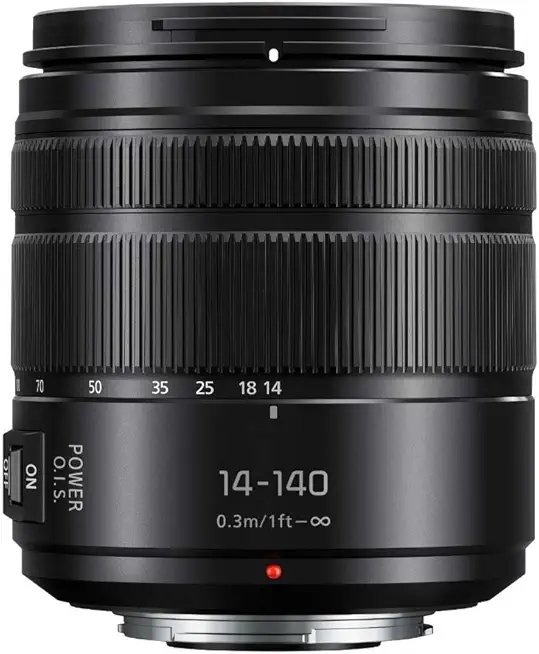
Panasonic Lumix G Vario 14-140mm f/3.5-5.6 II Micro Four Thirds
A go-anywhere, wide-to-telephoto zoom delivering reliable sharpness and smooth autofocus. Compact and lightweight, it excels for travel, everyday shooting, and handheld video thanks to steady performance across focal lengths.
Check PriceIn real use the 14-140mm is noticeably easier to carry all day. I’ve shot whole vacations with it on and barely noticed the weight difference versus the 12‑200mm. It feels more balanced on small bodies and is less tiring for street walking, which is great when you put comfort above having extreme reach.
Where it beats the 12‑200mm: it’s smaller, often feels quicker to move around, and includes Panasonic’s stabilization which helps handheld shots and video. Where it loses out is obvious — you give up the widest 12mm view and the very long 200mm reach. If you need to get tight frames of far subjects, you’ll miss that extra reach.
Who should pick it: photographers who travel light, shoot a mix of landscapes and people, and want steadier handheld shots without a big lens. If you rarely need 200mm and prefer comfort and steady video or walk-around use, this one is a great trade-off.
Alternative 2:

Olympus M.Zuiko Digital ED 14-150mm f/4.0-5.6 II Micro Four Thirds
Everyday all-in-one zoom balancing portability with consistent image quality. Quiet focusing, gentle zoom action, and balanced handling make it a smart choice for vacations, street scenes, and family moments.
Check PriceI’ve used the 14-150mm on family trips and it’s a very unobtrusive lens. It’s compact and quiet, so you can shoot in museums or around sleeping kids without drawing attention. Compared with the 12‑200mm, it’s easier to hide and carry but you do miss the ultra-wide shots and the longest telephoto reach.
What it does better than the 12‑200mm is being discreet and comfortable for everyday work. Autofocus is polite and fast enough for most casual shooting, and the handling makes it pleasant for long days. The downside is a slightly slower wide end and less reach, so low-light shots and distant subjects aren’t as forgiving as with the 12‑200mm.
Who should pick it: parents, vacation shooters, and street photographers who want one lens that won’t weigh them down or attract attention. If you value compactness and a calm shooting experience over maximum reach, this fits well.
Alternative 3:
Olympus M.Zuiko Digital ED 14-150mm f/4.0-5.6 II Micro Four Thirds
A compact travel solution offering extensive focal coverage without bulk. Engineered for versatile shooting scenarios, it delivers dependable sharpness, responsive AF, and unobtrusive handling for photographers on the move.
Check PriceUsing the 14-150mm again in a travel kit, I found it’s a practical middle ground: more coverage than a standard kit zoom but still small enough to slip in a day bag. Versus the 12‑200mm, it leans heavily toward portability. You sacrifice the 12mm ultra-wide and the 200mm reach, but you gain a lens that’s less front-heavy and more pleasant for long daylight walks.
In terms of image feel, the 14-150mm gives solid results for people and street work and is forgiving in everyday light. It won’t give the same background compression or reach for distant wildlife that the 12‑200mm does, and it’s a touch slower in low light, so you’ll need to watch shutter speed more closely.
Who should pick it: shooters who want a real travel-lens feel — light, flexible, and low-profile. If your trips are mostly city, family, or short hikes where packing light matters more than squeezing every meter of reach from the camera bag, this is the one I’d reach for.
What People Ask Most
Is the OM System 12-200mm f/3.5-6.3 good for travel photography?
Yes — its huge 12–200mm range makes it an excellent single-lens travel solution, though the slow aperture can limit low-light performance.
What is the 35mm equivalent focal length of the OM System 12-200mm f/3.5-6.3?
On Micro Four Thirds the equivalent focal length is roughly 24–400mm.
Is the OM System 12-200mm f/3.5-6.3 weather-sealed and dustproof?
Yes, the lens has dust- and splash-resistant sealing suitable for most outdoor shooting conditions.
How sharp is the OM System 12-200mm f/3.5-6.3 across its zoom range?
Center sharpness is very usable across most of the range, with some softness in the corners and at the extreme tele end, especially wide open.
Does the OM System 12-200mm f/3.5-6.3 have built-in image stabilization?
No — it relies on the camera body’s in-body image stabilization (IBIS) rather than having optical stabilization in the lens.
How fast and reliable is autofocus on the OM System 12-200mm f/3.5-6.3?
Autofocus is generally quick and reliable for travel and everyday subjects, though it’s not as aggressive as pro-grade telezooms for fast-paced action.
Conclusion
The OM System M.Zuiko Digital 12-200mm f/3.5-6.3 Micro Four Thirds is a rare, genuinely do-it-all zoom that earns its keep for travel and run-and-gun work. Its extraordinary coverage replaces multiple lenses and keeps you shooting instead of swapping glass. If one-lens convenience is your priority, it delivers where most kits can’t.
That versatility comes with clear compromises. The variable aperture curtails low-light prowess and shallow-depth looks, and there’s no confirmed in-lens stabilization to bail you out at the long end. It’s also noticeably larger than more compact 14–140/14–150-style options, so it’s not the lightest choice for all-day carry.
For documentary shooters, travelers and generalists who value reach and fewer lens changes, this lens is a pragmatic ally. It shines on assignments where flexibility and weather-resistant handling matter more than absolute speed or maximum sharpness. Use it as your only optic and you’ll appreciate how often it covers the shot.
If you need 200mm regularly and accept the aperture trade-offs, buy it and leave the rest of the bag at home. If you prize portability or low-light speed over absolute reach, consider smaller alternatives instead. The decision comes down to how often you rely on that extended reach versus how much weight and aperture speed you’re willing to trade.
OM System M.Zuiko Digital 12-200mm f/3.5-6.3 Micro Four Thirds
An ultra-versatile travel zoom offering wide-to-super-telephoto reach in a compact package. Sharp optics, close-focusing capability, and durable construction make it ideal for landscapes, wildlife, and on-the-go photography.
Check Price


0 Comments